DPDP Act Penalties for Data Breaches: What Businesses Need to Know
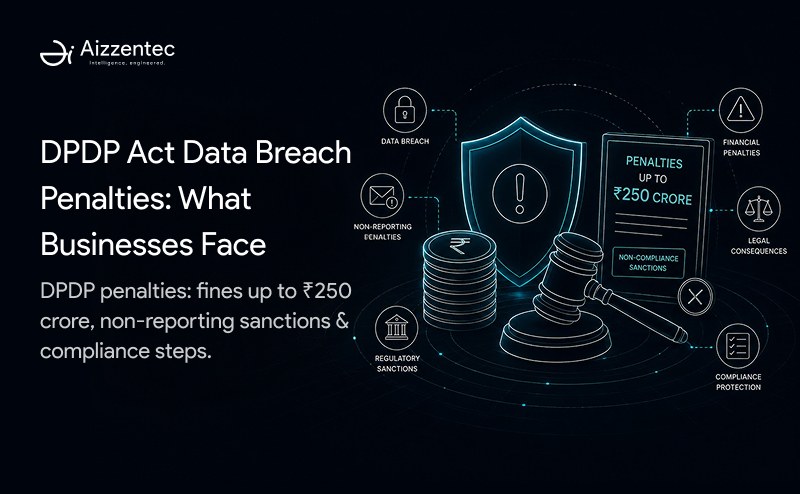
DPDP Act penalties are among the steepest in India’s regulatory landscape — and every business handling Indian users’ personal data needs to understand exactly what is at stake. With the increasing digitization of business operations, data privacy regulations have become more stringent worldwide. In India, the Digital Personal Data Protection Act (DPDPA) sets comprehensive guidelines for handling personal data, including strict penalties for non-compliance and data breaches.
This post is for business owners, compliance officers, and security leaders operating in India or processing Indian citizens’ data. You will learn how the DPDPA’s penalty structure works — from the Rs 250 crore penalty for failing to prevent breaches, to reputational and operational sanctions — and the best practices that keep your organization on the right side of the Data Protection Board.
For businesses operating in India or handling Indian users’ data, understanding these penalties is crucial to ensuring compliance and avoiding significant financial and reputational damage.
Understanding the DPDP Act and Its Scope
The DPDPA, enacted to safeguard individuals’ digital personal data, applies to businesses collecting, processing, or storing such data within India and to entities outside India processing Indian citizens’ personal data. The Act mandates robust security measures and adherence to data protection principles, ensuring responsible data handling and transparency.
What Are the Penalties for Data Breaches Under the DPDP Act?
A key aspect of the DPDPA is its penalty structure, which imposes severe consequences for violations. The severity of the penalty depends on the nature and extent of the breach, as well as the measures taken by the business to mitigate risks. Here’s what businesses need to be aware of:
1. Financial Penalties and DPDPA Fines
- Failure to prevent data breaches: Organizations that fail to implement adequate security measures leading to a data breach may face fines of up to **₹**250 crore.
- Failure to notify authorities: If an entity fails to report a breach to the Data Protection Board within the stipulated time, it could face additional penalties. (See our guide to the 72-hour breach notification and response plan under the DPDP Act for how to meet this deadline.)
- Non-compliance with data protection obligations: Companies that violate core data processing principles, such as data minimization, security safeguards, or lawful processing, may be subject to heavy fines, potentially running into hundreds of crores.
2. Reputational Damage and Legal Consequences
Besides financial repercussions, businesses guilty of non-compliance may suffer severe reputational damage. Loss of customer trust, legal proceedings, and heightened scrutiny from regulators can significantly impact an organization’s operations and market standing. It is also worth noting that penalties collected by the Board flow to the state rather than to affected individuals — a gap we examine in our post on compensation for data breach victims under the DPDP Act.
3. Additional Sanctions from the Data Protection Board
Regulatory authorities may impose operational restrictions, including temporary bans on data processing activities, which could disrupt business continuity. In extreme cases, companies may be required to delete unlawfully processed data or cease operations in India.
How Can Businesses Avoid DPDP Act Penalties?
To avoid penalties and ensure adherence to the DPDPA, businesses should adopt the following best practices:
- Implement Strong Security Measures: Deploy robust cybersecurity frameworks, including encryption, access controls, and regular security audits.
- Establish Incident Response Protocols: Have a well-defined plan for detecting, mitigating, and reporting data breaches promptly.
- Train Employees on Data Privacy: Regularly educate employees on compliance requirements and the importance of safeguarding personal data.
- Appoint a Data Protection Officer (DPO): Designate a responsible officer to oversee data protection policies and ensure regulatory compliance.
- Regular Compliance Audits: Conduct periodic audits to assess data handling practices and address vulnerabilities proactively.
Frequently Asked Questions
What is the penalty for a data breach under the DPDP Act?
Organizations that fail to implement adequate security measures leading to a data breach may face fines of up to ₹250 crore. The severity of the penalty depends on the nature and extent of the breach, as well as the mitigation measures the business had in place.
What happens if a company fails to report a data breach to the Data Protection Board?
Failing to report a breach to the Data Protection Board within the stipulated time can attract additional penalties on top of any fine for the breach itself. This makes a well-defined incident detection, mitigation, and reporting protocol essential.
Who do DPDP Act penalties apply to?
DPDPA penalties apply to businesses collecting, processing, or storing digital personal data within India, and also to entities outside India that process Indian citizens’ personal data. The Act’s scope is not limited by where a company is headquartered.
Can the Data Protection Board impose sanctions beyond fines?
Yes. Regulators may impose operational restrictions such as temporary bans on data processing activities, which can disrupt business continuity. In extreme cases, companies may be ordered to delete unlawfully processed data or cease operations in India.
How can businesses avoid DPDPA fines?
Deploy strong security measures (encryption, access controls, regular audits), establish incident response protocols, train employees on data privacy, appoint a Data Protection Officer, and run periodic compliance audits to catch vulnerabilities before regulators do.
Key Takeaways
- The DPDP Act imposes fines of up to ₹250 crore on organizations whose inadequate security leads to a data breach.
- Failing to notify the Data Protection Board within the stipulated time triggers additional penalties beyond the breach fine itself.
- Violating core principles like data minimization, security safeguards, or lawful processing can attract fines running into hundreds of crores.
- Consequences extend beyond money: reputational damage, legal proceedings, processing bans, forced data deletion, and even cessation of Indian operations.
- The DPDPA applies to Indian businesses and to foreign entities processing Indian citizens’ personal data.
- Strong security, incident response readiness, employee training, a DPO, and regular audits are the pillars of penalty avoidance.