Biometric Attendance Systems and the DPDP Act: How Fingerprint Scanners for Time Recording May Violate the Law
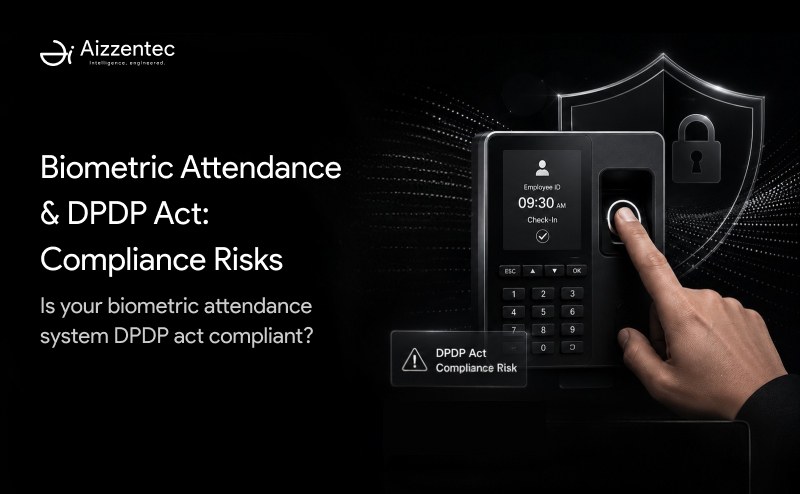
If your workplace uses a biometric attendance system, the DPDP Act should be on your compliance radar. In India, the Digital Personal Data Protection Act (DPDPA), 2023 has introduced stringent regulations regarding the use of personal data, particularly biometric data. Biometric identifiers like fingerprints are classified as sensitive personal data, demanding higher levels of protection and legal compliance.
This post is for employers, HR heads, and compliance officers who use — or are considering — fingerprint scanners for time recording. You will learn why employee consent is legally fragile in the workplace, when a Data Protection Impact Assessment (DPIA) is required, and what practical steps keep your fingerprint attendance compliance intact. If you are new to the law itself, start with our explainer on what the DPDP Act is and how it works.
Using fingerprint scanners for time recording systems in workplaces can potentially lead to violations under the DPDPA. Here’s why.
Why Is Biometric Data Sensitive Under the DPDP Act?
Biometric data, including fingerprints, is classified as sensitive personal data because it uniquely identifies individuals. The DPDPA mandates specific conditions for processing such data, which must be justified by a legal basis and aligned with principles like purpose limitation and data minimization.
Challenges of Using Fingerprints in Timekeeping
1. Is Employee Biometric Consent Valid in Employment Contexts?
The DPDP Act emphasizes that consent for processing sensitive personal data must be:
- Informed: Employees should be fully aware of how their biometric data will be processed.
- Specific and Clear: Consent must be explicit and recorded clearly.
- Freely Given: Consent obtained under pressure or implied from an employment relationship may not be valid due to the power imbalance between employers and employees.
In an employment setting, employees may feel coerced to provide consent, undermining its validity. Employers cannot assume that the absence of objections equates to free consent. This power-imbalance problem runs through all workplace data processing — see our guide to employee data protection under the DPDP Act for HR teams for the broader picture.
2. Purpose Limitation and Data Minimization
Organizations must clearly define and disclose the purpose of collecting biometric data, such as attendance tracking. The DPDPA prohibits using more intrusive measures if less invasive alternatives (e.g., access cards or PIN-based systems) are available.
3. Risk of Non-Compliance Without a DPIA
The DPDP Act requires a Data Protection Impact Assessment (DPIA) for processing sensitive personal data like biometrics, especially when it poses a high risk to the individual’s rights and freedoms. Employers using fingerprint scanners without conducting a DPIA may be in violation of the Act.
4. Security Concerns and Cross-Border Data Transfers
If biometric data is stored or processed by third parties, especially in foreign jurisdictions, the DPDPA’s cross-border data transfer restrictions come into play. Employers must ensure data localization or seek approval for transfers, ensuring equivalent protection in recipient countries.
Key Takeaways for Employers
- Evaluate Necessity: Assess whether fingerprint-based timekeeping is essential or if alternatives suffice.
- Obtain Valid Consent: Clearly communicate the purpose, obtain explicit and voluntary consent, and offer alternatives for employees who choose not to use biometric systems.
- Conduct DPIAs: Proactively analyze the impact of biometric data processing to mitigate risks.
- Ensure Secure Data Storage: Safeguard biometric data using encryption and restrict access to authorized personnel only.
What Are the Penalties for Non-Compliance?
Violations of the DPDPA, such as improper consent or lack of a DPIA, can lead to hefty fines and reputational damage. Upholding employees’ rights is not just a compliance requirement but also a step toward building trust and accountability.
Conclusion
Using fingerprint scanners for attendance tracking may seem efficient but poses significant risks under the DPDP Act. Employers must carefully evaluate their systems, prioritize less invasive alternatives, and comply with the law to avoid penalties. By adopting a proactive approach, businesses can ensure biometric data privacy while fostering a secure and respectful workplace environment.
Frequently Asked Questions
Is a biometric attendance system legal under the DPDP Act?
Biometric attendance systems are not banned, but they carry significant compliance risk under the DPDP Act because fingerprints are sensitive personal data. Processing must rest on a valid legal basis, satisfy purpose limitation and data minimization, and be backed by informed, specific, and freely given consent — conditions that are hard to meet in an employer-employee relationship.
Is employee consent for fingerprint scanning valid under the DPDPA?
Often it is questionable. Consent implied from an employment relationship or obtained under pressure may not be valid due to the power imbalance between employers and employees. Employers cannot treat the absence of objections as free consent, and should offer non-biometric alternatives to employees who opt out.
Do employers need a DPIA before using fingerprint scanners?
Yes — the DPDP Act requires a Data Protection Impact Assessment (DPIA) for processing sensitive personal data like biometrics, especially where it poses a high risk to individuals’ rights and freedoms. Employers deploying fingerprint scanners without a DPIA may be in violation of the Act.
What are safer alternatives to biometric attendance tracking?
Less invasive options include access cards and PIN-based systems. The DPDPA prohibits using more intrusive measures when such alternatives are available, so employers should evaluate whether fingerprint-based timekeeping is genuinely essential before deploying it.
Can employee biometric data be stored with third parties or abroad?
Only with care. If biometric data is stored or processed by third parties, especially in foreign jurisdictions, the DPDPA’s cross-border data transfer restrictions apply. Employers must ensure data localization or seek approval for transfers, with equivalent protection guaranteed in recipient countries, plus encryption and strict access controls.